Archives
- 2026-08
- 2026-07
- 2026-06
- 2026-05
- 2026-04
- 2026-03
- 2026-02
- 2026-01
- 2025-12
- 2025-11
- 2025-10
- 2025-09
- 2025-03
- 2025-02
- 2025-01
- 2024-12
- 2024-11
- 2024-10
- 2024-09
- 2024-08
- 2024-07
- 2024-06
- 2024-05
- 2024-04
- 2024-03
- 2024-02
- 2024-01
- 2023-12
- 2023-11
- 2023-10
- 2023-09
- 2023-08
- 2023-07
- 2023-06
- 2023-05
- 2023-04
- 2023-03
- 2023-02
- 2023-01
- 2022-12
- 2022-11
- 2022-10
- 2022-09
- 2022-08
- 2022-07
- 2022-06
- 2022-05
- 2022-04
- 2022-03
- 2022-02
- 2022-01
- 2021-12
- 2021-11
- 2021-10
- 2021-09
- 2021-08
- 2021-07
- 2021-06
- 2021-05
- 2021-04
- 2021-03
- 2021-02
- 2021-01
- 2020-12
- 2020-11
- 2020-10
- 2020-09
- 2020-08
- 2020-07
- 2020-06
- 2020-05
- 2020-04
- 2020-03
- 2020-02
- 2020-01
- 2019-12
- 2019-11
- 2019-10
- 2019-09
- 2019-08
- 2019-07
- 2019-06
- 2019-05
- 2019-04
- 2018-11
- 2018-10
- 2018-07
-
Studies of nuclear transplantation of
2020-02-14
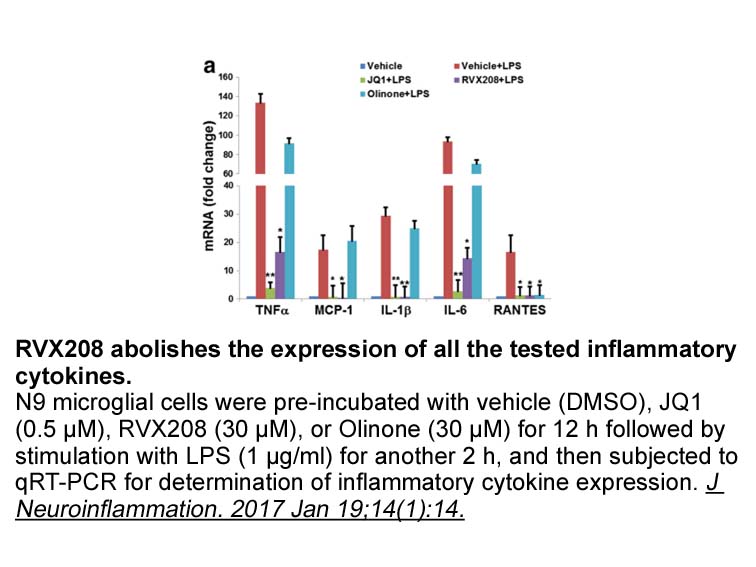
Studies of nuclear transplantation of diploid imprint-free PGCs have shown that the reconstituted oocytes developed to day 9.5 of gestation, with severely retarded embryos and abnormal placentae (Kato et al., 1999). We also reported that MII oocyte injection of imprint-free phESCs without imprinted
-
Boulares group has demonstrated that the NF
2020-02-14
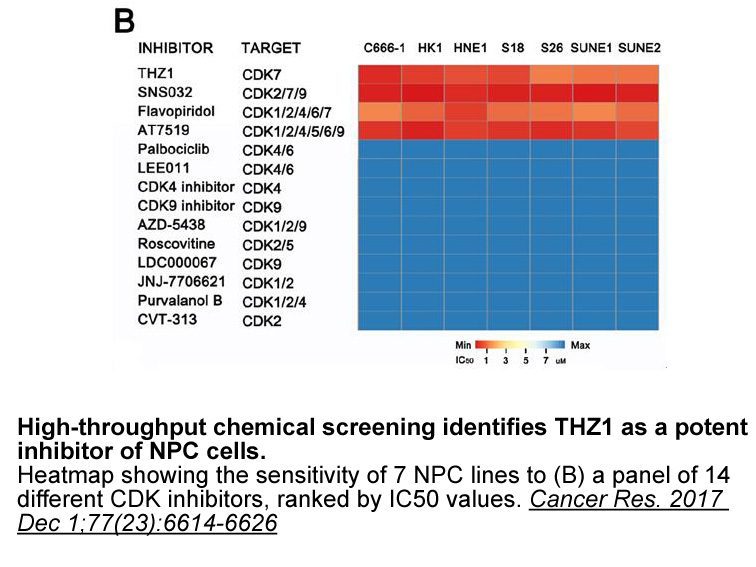
Boulares group [82] has demonstrated that the NF-κB1/p50 NF-κB, a family member of type I NF-κB, is an excellent substrate for DNA-PK, which-dependent phosphorylation of NF-κB1 at serine 20 appears to enhance its binding to DNA as either a homodimer or a heterodimer with p65 NF-κB and the ability of
-
The ADME profile of AAT was
2020-02-13
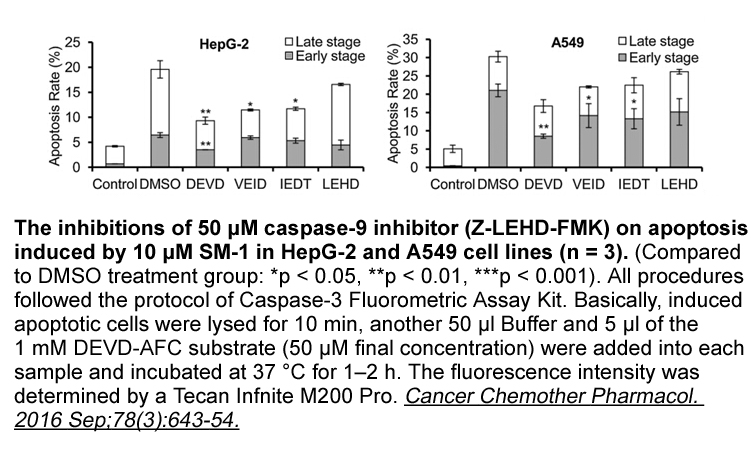
The ADME profile of AAT-008 () was very promising, with high stability in HLM. The pre-clinical pharmacokinetic properties of AAT-008 were also assessed in rats (Sprague-Dawley, male), dogs (beagle, male), and monkeys (cynomolgus, male). The experimentally determined parameters are summarized in . A
-
It was hypothesized that if modafinil acts
2020-02-13
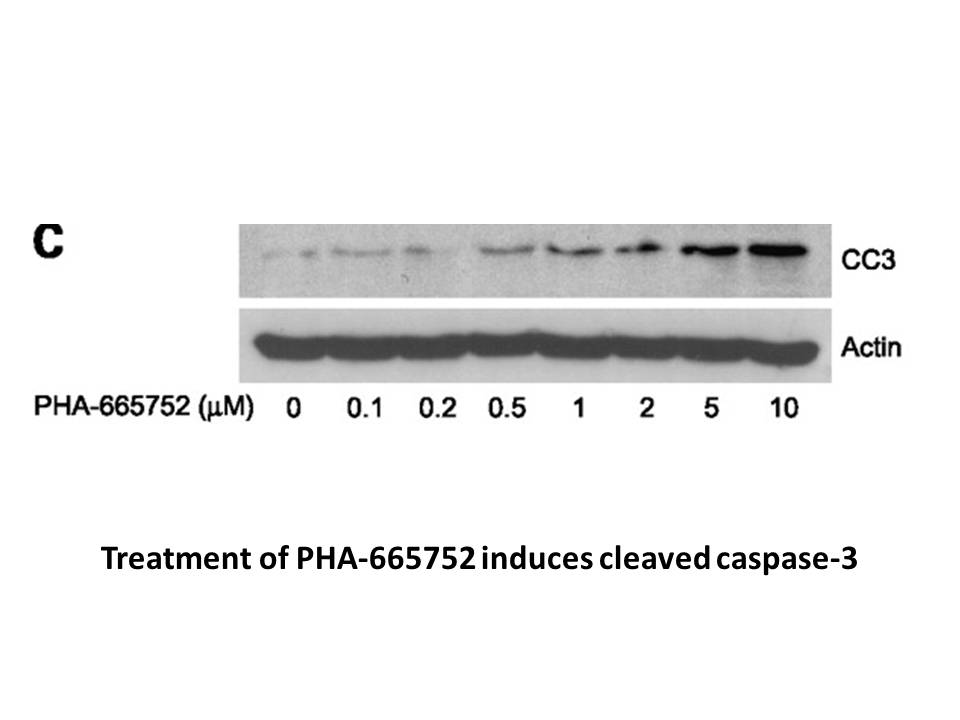
It was hypothesized that if modafinil acts primarily via a noradrenergic mechanism, Dbh −/− mice should be non-responsive since they completely lack NE. In contrast, if modafinil acts mainly through DA systems, these mice should be hypersensitive. Modafinil was tested in Dbh −/− mice using both loco
-
Several single nucleotide polymorphisms SNPs in humans affec
2020-02-13
Several single nucleotide polymorphisms (SNPs) in humans affect CYP3A expression and activity (Lamba et al., 2002). The CYP3A4 SNP rs2740574 (also referred to as CYP3A4*1B, by The Human Cytochrome P450 (CYP) Allele Nomenclature Database, http://www.cypalleles.ki.se/) is a change in the promoter regi
-
Soluble receptors have been shown
2020-02-13
Soluble receptors have been shown to be important and common regulators of many cytokines within the immune system, including IL-1, IL-6, IFNγ, TNF-α, GM-CSF, G-CSF and others (Fernandez-Botran, 1991, Heaney, Golde, 1998). We previously described a novel soluble receptor, sCSF-1R, that to date has o
-
br Clinical trials of CRM inhibitors KPT
2020-02-13

Clinical trials of CRM1 inhibitors KPT-330 clinical trials have been initiated with promising very early results. One trial includes patients with advanced solid tumors whose disease has progressed after at least one prior therapy for metastatic disease (NCT01607905). Another trial includes patie
-
One strategy which is different from the above
2020-02-13
One strategy which is different from the above is to isolate a similar enzyme to the one under study which will not be recognized by the antibody of the original protein. This approach will lead to prolonging an enzyme’s activity. For example, a novel variant of Carboxypeptidase G2 (CPG2), which has
-
Khan et al investigatedAnomalin a pyranocoumarin constituent
2020-02-13
Khan et al. investigatedAnomalin 44, a pyranocoumarin constituent of S. divaricata, which exhibits potent anti-inflammatory activity. The anomalin 44 dose-dependently inhibited inducible nitric oxide synthase (iNOS) and cyclooxygenase-2 (COX-2) mRNA and protein expression in LPS-stimulated RAW 264.7
-
It would be very useful if unphosphorylated
2020-02-13

It would be very useful if unphosphorylated CK1s could be prepared using an E. coli expression system without the troublesome in vitro phosphatase treatment. So far, it has been shown that coexpressed λPPase, a Mn2+-dependent protein phosphatase that can dephosphorylate phospho-Ser/Thr/Tyr [20,21],
-
ClC is a member of the voltage gated chloride channel
2020-02-13
ClC-3 is a member of the voltage-gated chloride channel superfamily and has many roles in cell proliferation, apoptosis, ProteOrange progression and so on (Dai et al., 2005). A growing number of studies showed that ClC-3 encoded a volume-regulated Cl− channel (ICl,Vol) in heart, that could contribu
-
br Conclusions br Statement of authorship br Nonaneurysmal s
2020-02-13
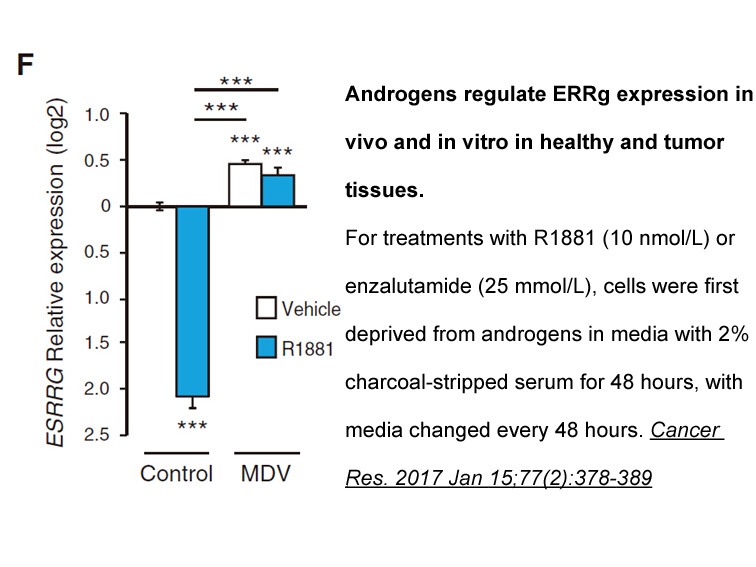
Conclusions Statement of authorship Nonaneurysmal subarachnoid hemorrhage (NA-SAH) differs from aneurysmal subarachnoid hemorrhage (SAH) in both clinical course and outcome. In spite of many reports and case series since the first description in 1985, the etiology of NA-SAH remains uncertain
-
Several studies have already shown
2020-02-13
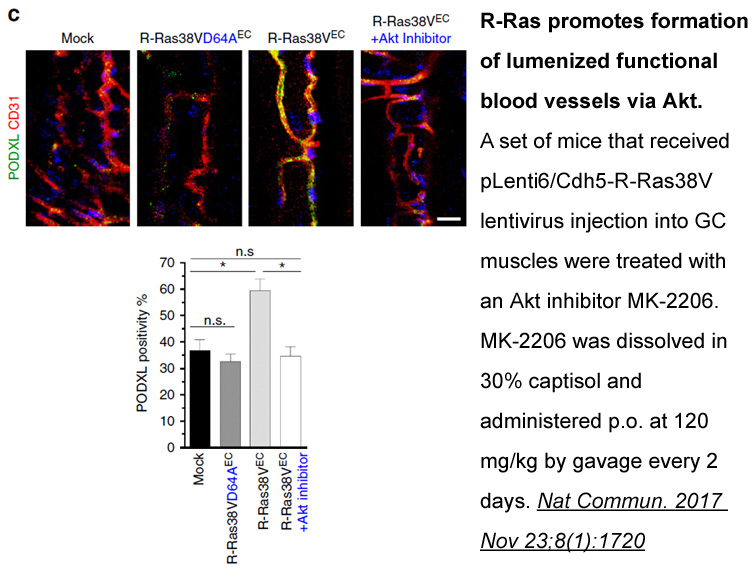
Several studies have already shown that mPR activation can significantly reduce intracellular cAMP levels in different kind of cells, such as GT1-7 neuronal cells [32], MDA-MB-468 breast cancer cells [55] and primary vascular endothelial cells [56]. The experiments performed with PTXa and 8-Br-cAMP
-
br Cytochrome P monooxygenases Cytochrome P monooxygenases
2020-02-13
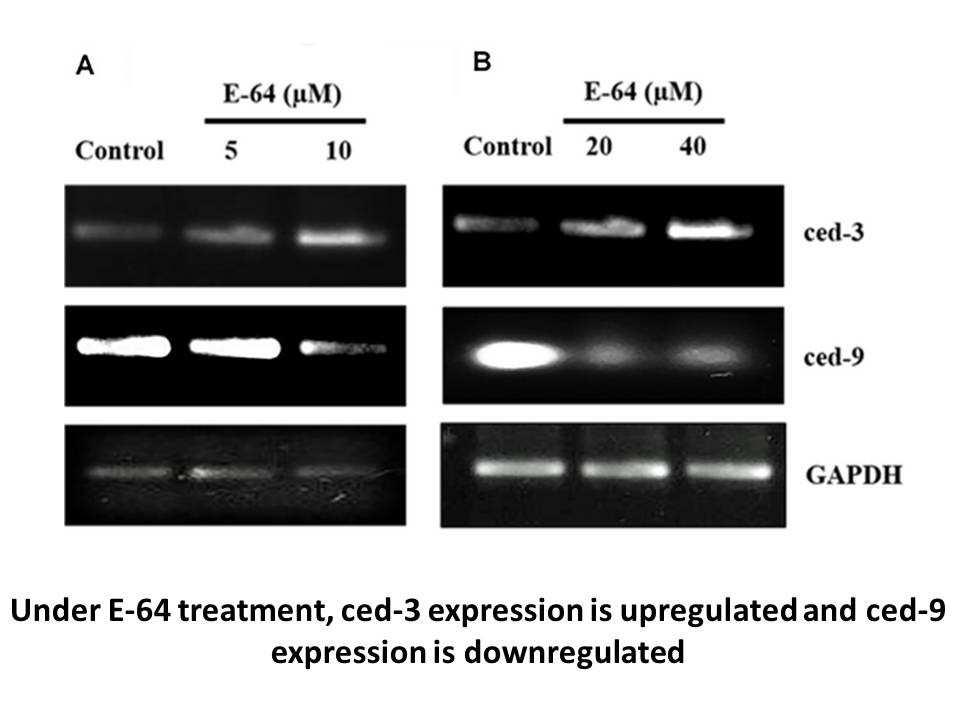
Cytochrome P450 monooxygenases Cytochrome P450 monooxygenases (P450s) belong to one of Nature’s most versatile group of enzymes for C–H functionalization and are able to perform challenging regioselective and stereoselective activations of remote, unactivated C(sp3)–H bonds, for which there are o
-
Gupta et al have shown that
2020-02-13
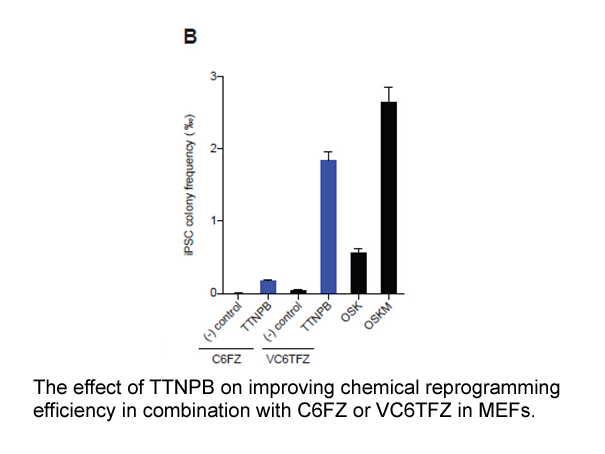
Gupta et al have shown that a genetic variant associated with the 5 vascular diseases (coronary artery disease, migraine, carotid artery dissection, fibro-muscular dysplasia, and hypertension) is a distal regulator of the ET-1 gene [30]. They found that a single nucleotide polymorphism (SNP) located
16457 records 906/1098 page Previous Next First page 上5页 906907908909910 下5页 Last page